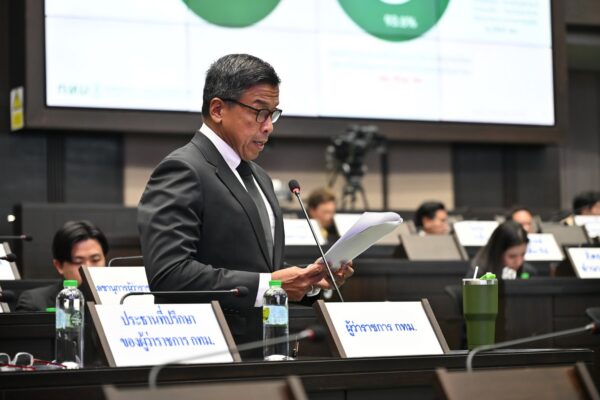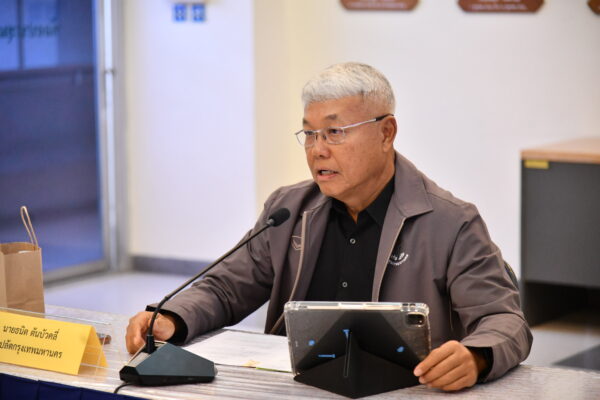
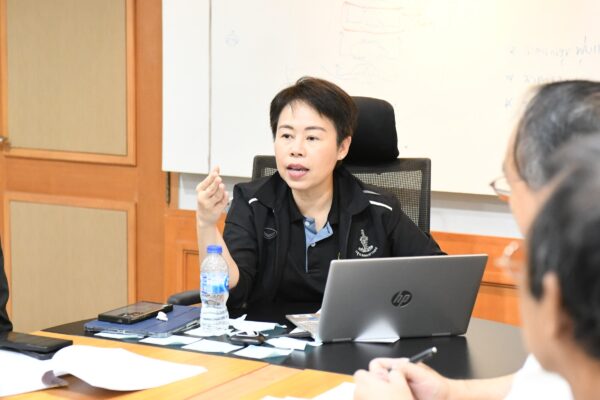

On February 24, 2026, Assoc. Prof. Tavida Kamolvej, Deputy Governor of Bangkok, addressed the Office of Natural Resources and Environmental Policy and Planning, emphasizing that the path to a sustainable metropolis requires radical collaboration over fragmented silos. She noted that current attempts to separate responsibilities strictly by Sustainable Development Goals (SDGs) often lead to disjointed efforts, making genuine success difficult to achieve. A primary hurdle remains the Bangkok Metropolitan Administration’s (BMA) limited authority; for instance, critical issues like dust pollution reduction are inextricably tied to large-scale infrastructure plans managed by outside agencies. Deputy Governor Tavida asserted that without sincere cross-sector cooperation, even the most ambitious environmental targets remain out of reach.
To streamline these efforts, the BMA is pivoting toward a more integrated management model where sustainability is viewed as a core strategy rather than an external burden. The Strategy and Evaluation Department now serves as a central hub, aligning area-based initiatives with international standards while focusing on three core pillars: infrastructure, quality of life, and management. A key proposal for the future involves restructuring the Sustainable Environment Office (SEO) to report directly to the Governor’s Secretariat or the Office of the Permanent Secretary. This structural shift, which will be submitted for the Public Sector Excellence Award, aims to enhance coordination and expand the BMA’s scope from merely maintaining public parks to managing urban green spaces in partnership with the private sector.
Sustainability, according to Assoc. Prof. Tavida, relies on creating continuous, meaningful mechanisms and eliminating rigid KPIs that fail to reflect actual progress. The BMA has moved away from static five-year assessments in favor of annual evaluations that better align with the Governor’s policies and national frameworks. She concluded by noting that while information systems were once viewed as a risk, they are now essential tools for foresight. These systems will help the BMA determine the practical feasibility of “imagined scenarios,” ensuring that leadership’s commitment to a greener Bangkok is backed by both sincere stakeholder interaction and rigorous, data-driven results.
In fiscal year 2026, the Office of Natural Resources and Environmental Policy and Planning, with the Thailand Future Foundation, started a project to develop innovative policies for managing national natural resource and environmental issues. The goal is to identify key challenges for 2028–2032 and provide local implementation recommendations.
#BMA #SDG #Sustainability