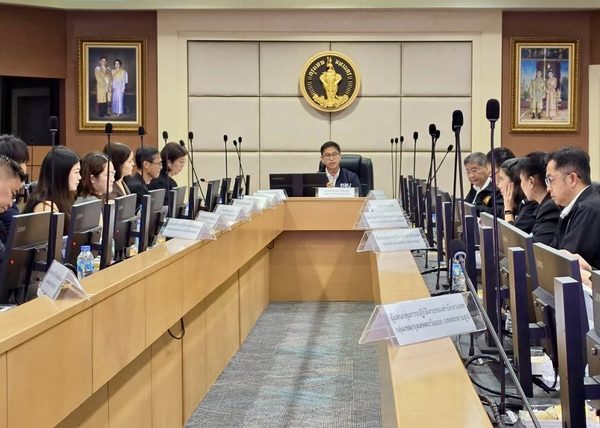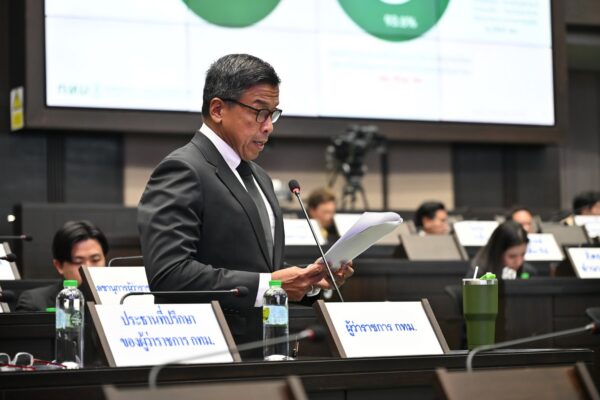
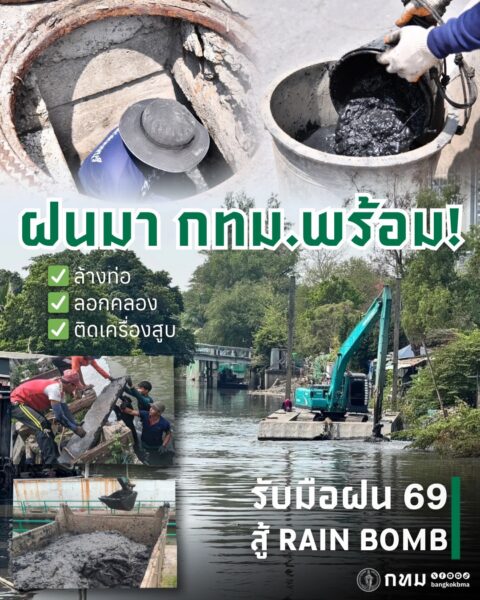
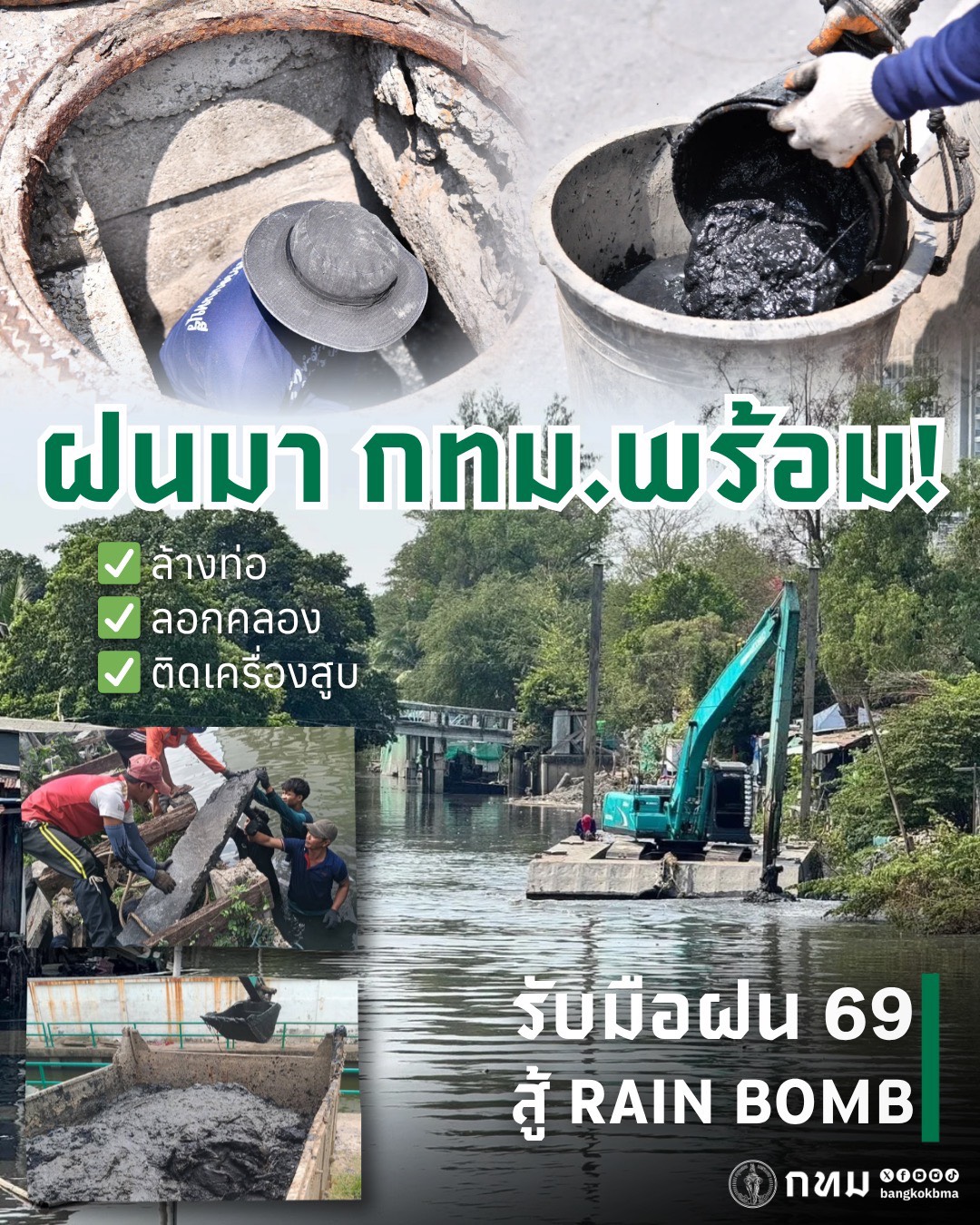
As the 2026 rainy season approaches, the Bangkok Metropolitan Administration (BMA) has undertaken a comprehensive overhaul of its municipal drainage infrastructure to safeguard the capital against localized flooding and erratic weather patterns. Transitioning from a reactive approach to a highly coordinated, proactive strategy, the BMA is concurrently enhancing three essential components: drainage pipes, main canals, and emergency water pumping networks. Operations are progressing at an expedited pace, with teams already clearing more than 2,980 kilometers of drainage pipes, which represents nearly 78 percent of the annual target. Additionally, canal dredging has achieved over 65 percent completion, while waterway clearing efforts have exceeded 91 percent. These measures ensure that the city’s primary watercourses are well-equipped to efficiently redirect the runoff away from high-risk residential and commercial areas.
To reinforce these natural and structural channels during emergency deluges, the BMA has achieved 100 percent installation of its pumping stations across 566 strategic locations citywide. The distribution of water propulsion systems and localized mobile pumps to individual district offices is on track for full completion by June, backed by 12 heavy-duty mobile water pumping units held in reserve for rapid deployment. A major focus of this year’s readiness protocol is mitigating the impact of “Rain Bombs”, extreme, short-term downpours that have increased in frequency over the last four years. The BMA recently simulated a severe weather scenario involving 300 millimeters of rainfall within a three-hour window to map potential flash flooding across all districts, enabling localized teams to manage water resources in real time.
Ultimately, the BMA emphasizes that its drainage infrastructure represents only half of the solution, noting that true urban resilience requires active public cooperation. The BMA is urging residents to prevent major blockages by refraining from discarding waste into drains and canals, while encouraging the use of civic reporting systems to flag localized issues early. By combining industrial-grade engineering with civic responsibility, the BMA aims to navigate the upcoming monsoon season with minimal disruption to the daily lives of Bangkok citizens.